
recent posts
- The Tale of a Null Field: Why Data Hygiene Matters in SaaS Development
- AmericaOS™: Debugging the Human Condition
- The Architecture of Trust: Why Metadata Matters in Legal Intelligence
- What Happens When a Client Questions Your Statute of Limitations Calculation?
- Recruiter Spam: Why You’re Not the Prize—You’re the Battleground
about
Category: Software Development
-

Introduction In software, developers get bug reports — stack traces, error logs, crash dumps. In society, those reports come as protest, art, or lived testimony. They are the social crash logs we’ve learned to ignore. The Development Environment No One Chose In software, a development environment is where you experiment, iterate, and fail safely. Mistakes…
-

Imagine this: a client calls months after you’ve filed a case and questions whether your statute of limitations calculation was accurate. In court, opposing counsel challenges it. How do you respond? For many legal software systems, the answer is frustratingly simple: you’re defenseless. Most applications are black boxes. They spit out a date, but provide…
-

Accountability. Auditability. Explainability. Reliability. Security. Integrity. These aren’t features. They’re foundations. In legal tech, every system, every line of code, every automated decision must not only compute — it must stand under the weight of litigation, regulation, and professional scrutiny. Because the question isn’t: Does it work?It’s: Can it testify? Pressure bursts pipes. But it…
-

Introduction Imagine you’re on the witness stand, and opposing counsel asks a simple question: “Can you prove who accessed this critical piece of evidence?” You confidently present your audit trail showing who created and modified the data. But what about who read it? In legal software, we’ve long focused on the CUD of audit trails:…
-
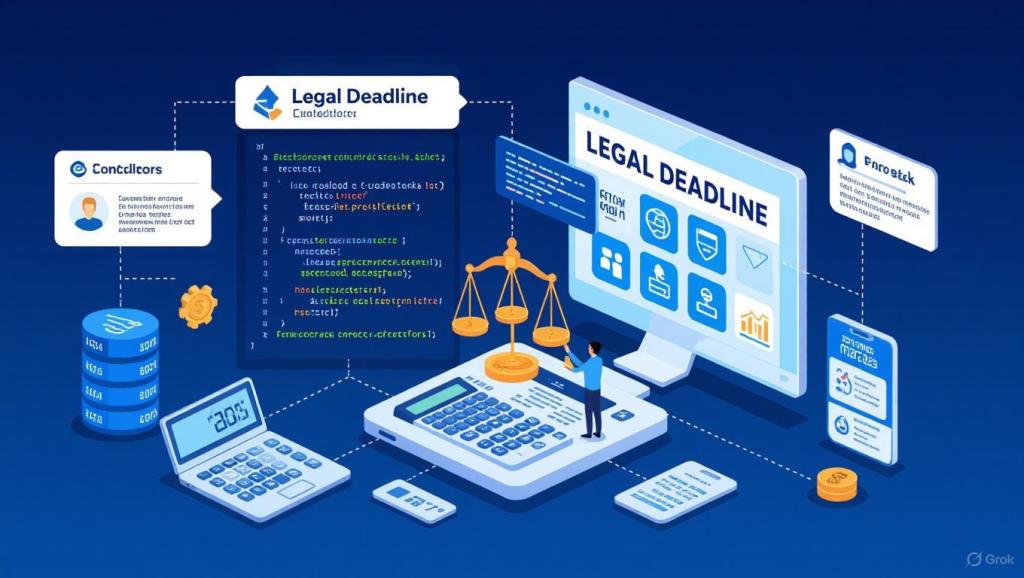
When you’re building specialized software, there’s always a point where the old way of doing things starts to buckle under the weight of new requirements. For me, that point came when I realized I couldn’t keep hardcoding new calculators into the system. From Hardcoding to Dynamic Instantiation At first, each calculator was wired in by…
-

If you’ve ever tried to calculate a legal filing deadline, you know it’s not as simple as “incident date + X years.” In many cases, multiple rules apply — each with its own logic, timelines, and exceptions. That’s where the fun begins. Imagine a single case producing three possible deadlines: Each of these is designed…
-

When you build a specialized legal tech platform, one of the hardest decisions isn’t the tech stack or the UI — it’s deciding what belongs in the self-service product and what should stay in direct consulting engagements. At first glance, the temptation is to make everything available in software. It feels generous, scalable, and client-friendly.…
-
One of the more interesting features I recently built into a legal software application was support for event tolling—a process used to pause countdown timers in legal workflows when certain conditions are met. On paper, it’s just a date adjustment. In reality, it’s a complex, high-stakes chain of logic that affects deadlines, rights, and outcomes.…
-

72,000 identities exposed—and the irony runs deep. There’s something darkly poetic about what happened with the Tea App. Billed as a place to spill secrets, vent frustrations, and share personal truths under the comforting blanket of anonymity, it quickly became a hotspot for gossip, confessions, and—let’s be honest—cruelty. People used it to air dirty laundry,…
-

We talk a lot about code quality, robust architectures, and agile sprints. But what about the most critical system in any software development process: you? Just like the applications we build, our own “human core services” need regular maintenance, bug fixes, and optimization to perform at their best. My recent internal changelog even reflected this:…
 Paul Jones Software