
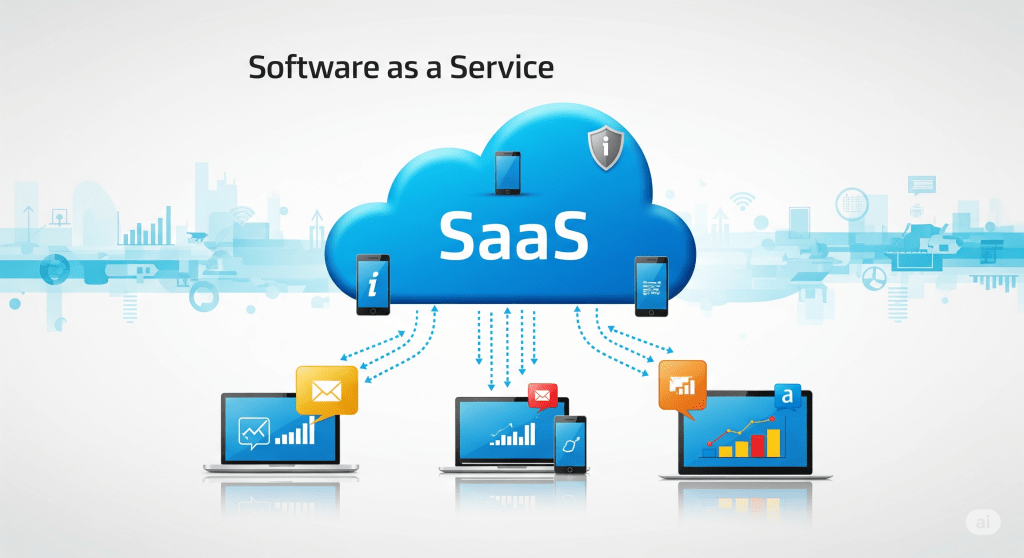
A developer-friendly guide to what SaaS is, how it works, and why it’s changing the way we build and deliver software.
If you’ve ever used Gmail, Dropbox, or QuickBooks Online, you’ve already interacted with a SaaS product. But what exactly is SaaS? And what does it mean when someone says they’re “building a SaaS”? Whether you’re a software developer, aspiring founder, or simply curious about modern software delivery models, this article offers a practical introduction to Software as a Service—what it is, how it works, and why it matters.
What is SaaS?
SaaS (Software as a Service) is a method of delivering software over the internet as a subscription service rather than as a one-time product. Instead of downloading and installing software on your own hardware, you access it through a browser—anytime, anywhere.
The SaaS model is built around ongoing relationships: the user subscribes and pays regularly (monthly or annually), and the provider continuously maintains, updates, and hosts the application.
Key Features of SaaS:
- Cloud-hosted: No local installation needed.
- Subscription-based pricing: Pay-as-you-go or tiered pricing models.
- Multi-tenant architecture: One codebase, many customers.
- Automatic updates: No patching or version management by the user.
- Scalable delivery: Infrastructure can grow with demand.
Common SaaS Terms You’ll Hear
Here are a few foundational terms to understand when diving into the SaaS world:
- Tenant: A single paying customer or organization using your SaaS product.
- MVP (Minimum Viable Product): The simplest version of a product that solves a core problem.
- Churn: The rate at which customers cancel their subscriptions.
- ARR / MRR: Annual or Monthly Recurring Revenue.
- Onboarding: The process of getting new users up and running.
- Multi-tenancy: A design where a single instance of the software serves multiple customers.
Why Users Love SaaS
For users—whether individuals or organizations—SaaS offers several compelling benefits:
- Low upfront cost: No expensive licensing fees or hardware required.
- Zero maintenance burden: The provider handles updates, backups, and server maintenance.
- Access from anywhere: Browser-based access makes remote work seamless.
- Frequent improvements: New features roll out continuously.
Why Developers Build SaaS Products
From a developer or founder’s perspective, SaaS is appealing because it creates the opportunity for recurring revenue and long-term customer relationships. Here’s why developers increasingly choose the SaaS route:
- Predictable income: Subscriptions offer consistent, growing revenue.
- Compounding growth: Each new subscriber adds to the revenue baseline.
- Tighter customer feedback loops: You can release, iterate, and improve faster.
- Low distribution costs: With cloud infrastructure, you can serve a global audience from day one.
Challenges of Building SaaS
Of course, nothing worth building is ever easy. SaaS comes with its own set of architectural and operational challenges:
1. Security and Compliance
When you’re storing customer data—especially sensitive or regulated data—security is paramount. Encryption, access controls, and compliance (GDPR, HIPAA, etc.) become table stakes.
2. Multi-tenancy Complexity
Serving multiple customers from a single codebase and database sounds efficient—but introduces tricky challenges around data isolation, tenant-based configuration, and authorization logic.
3. Uptime Expectations
SaaS users expect 24/7 availability. That means monitoring, backups, disaster recovery, and infrastructure that scales without crumbling.
4. Billing and Subscription Management
Integrating with payment gateways, handling failed payments, issuing refunds, managing upgrades/downgrades—it’s more complex than it looks.
5. User Support and Onboarding
Technical excellence won’t save a product that’s too confusing to use. Good SaaS also means good documentation, support workflows, and onboarding UX.
Real Talk: SaaS Isn’t Passive Income (At First)
There’s a myth floating around that SaaS is a “set it and forget it” business model. In truth, SaaS requires active development, customer service, bug fixing, and marketing—especially in the early stages. Over time, though, the compounding nature of subscription revenue can shift the balance toward more sustainable growth and lifestyle-friendly income.
Who Should Build a SaaS?
- Developers who want to productize their skills
- Domain experts who understand a niche inside and out
- Entrepreneurs looking for long-term, scalable income streams
- Freelancers and consultants who want to move from time-for-money to asset ownership
Final Thoughts
SaaS isn’t just a buzzword—it’s a shift in how software is built, sold, and maintained. For developers like me who are building a product on nights and weekends, it offers a unique opportunity to create long-lasting value and independence. If you’ve ever dreamed about owning your own product, SaaS is one of the most accessible ways to get started.
In future posts, I’ll dive into lessons I’ve learned building my own SaaS from the ground up—including how to design for multitenancy, how I price and package subscriptions, and what nobody tells you about going from zero to launch.
Coming Soon on the Blog:
- SaaS Architecture for Solo Developers
- How I Handle Roles and Permissions in My SaaS
- Pricing Models That Actually Work
If this sounds like a journey you want to follow, subscribe or check back every Monday and Thursday at PaulJonesSoftware.com. You can also follow me on Twitter/X at @paulajonesjr.
 Paul Jones Software
Leave a comment